

 Summary Box [In a hurry? Just read this⚡]
- Anthropic officially released Claude Opus 4.6, their most powerful model to date, with major gains in long-horizon reasoning, agentic performance, and real-world coding & knowledge work.
- It introduces a beta 1 million token context window, the first ever for an Opus-class model, enabling dramatically better handling of massive documents and long conversations.
- New capabilities include autonomous debugging of huge codebases, superior multi-step planning, refined judgment on ambiguous problems, and sustained high performance over very long sessions.
- Product integrations now include advanced Excel data processing, PowerPoint branded slide generation (research preview), and upcoming Claude Code agent teams that collaborate in parallel.
- Claude Opus 4.6 leads several major benchmarks including Terminal-Bench 2.0, Humanity’s Last Exam, and GDPval-AA, while maintaining strong safety characteristics and low misalignment risk.
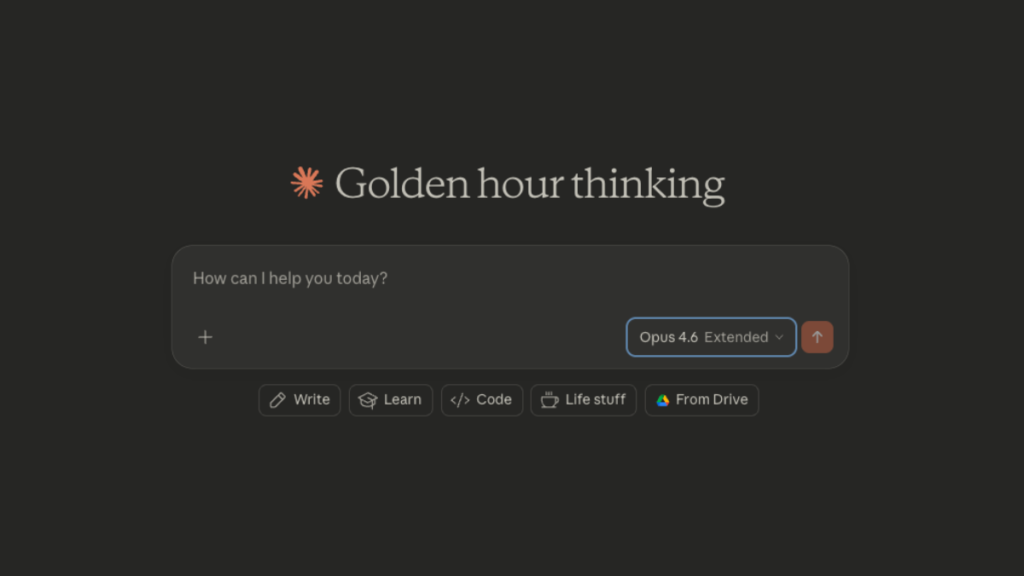
Claude Opus 4.6 Released with massive 1 million context window: Anthropic has rolled out Claude Opus 4.6, its most advanced model yet, marking a substantial upgrade to the flagship Opus series.
Announced on February 5, 2026, this iteration focuses on enhancing reasoning depth, agentic performance, and practical utility across diverse professional workflows.
For developers and knowledge workers, this means more reliable assistance in complex tasks, from coding in vast repositories to conducting intricate financial analyses.
Core Model Enhancements
Claude Opus 4.6 introduces superior planning mechanisms, allowing it to sustain long-running agentic tasks with greater consistency and self-correction.
It excels at navigating massive codebases, reviewing code for errors, and debugging autonomously, which addresses common pain points in software engineering.
A standout addition is the beta rollout of a 1 million token context window, the first for an Opus-class model, enabling it to process and recall information from extensive documents far more effectively than predecessors.
This reduces context degradation, ensuring accurate retrieval even in lengthy interactions.
The model also demonstrates refined judgment on ambiguous problems, deeper thinking processes, and maintained productivity over extended sessions.
These improvements make it particularly suited for expert-level reasoning in multidisciplinary fields, where it can revisit assumptions and refine outputs for higher accuracy.
Check Out: Claude Opus 4.6 Review: Should you upgrade?
Integrated Product Features
Beyond the core model, Anthropic is expanding Claude’s ecosystem with practical tools.
In Excel, the assistant now handles unstructured data ingestion, infers patterns, and executes multi-step edits in a single go, streamlining financial modeling and data validation.
PowerPoint integration, available in research preview for premium plans, allows Claude to generate branded presentations from descriptions while respecting layouts and fonts.
For coding enthusiasts, Claude Code gains agent teams in preview, where multiple specialized agents collaborate in parallel on subdivided tasks like comprehensive codebase audits.
On the API side, developers benefit from adaptive thinking controls, letting the model adjust reasoning effort via four tunable levels for optimal balance of speed, cost, and intelligence.
Context compaction further extends task longevity by summarizing prior interactions.
Benchmark Dominance and Safety Focus
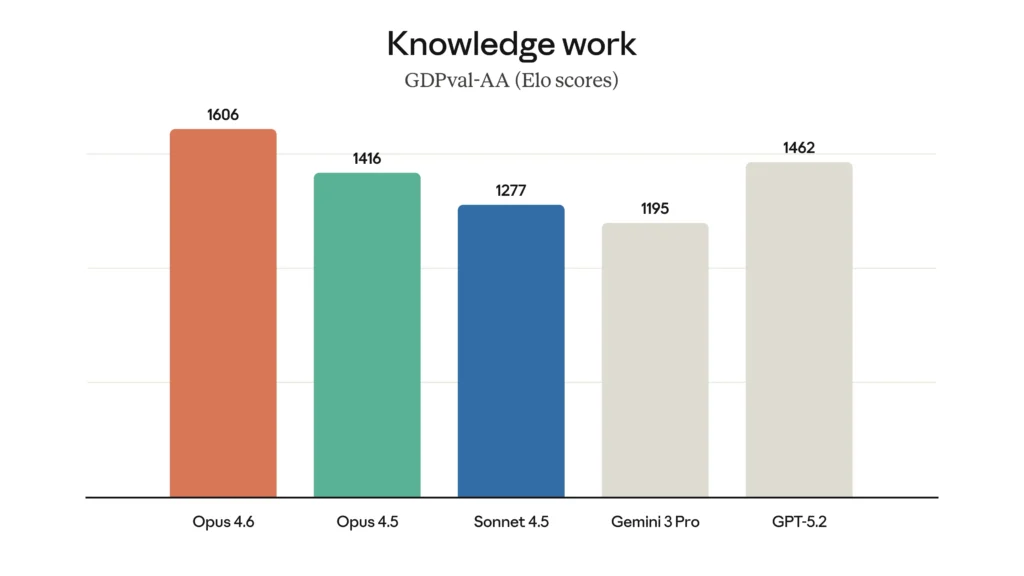
Claude Opus 4.6 sets new standards on key evaluations, leading in agentic coding via Terminal-Bench 2.0, multidisciplinary reasoning on Humanity’s Last Exam, and knowledge work in GDPval-AA, outperforming rivals like GPT-5.2.
It shines in long-context retrieval, cybersecurity vulnerability detection, and life sciences, with notable lifts in computational biology and organic chemistry.
Safety remains paramount, with the model exhibiting low rates of misalignment, over-refusals, and harmful behaviors.
Anthropic has conducted extensive evaluations, including new cybersecurity probes, to ensure robustness against misuse while accelerating defensive applications.
Availability and Implications
Accessible immediately via claude.ai, the API (as claude-opus-4-6), and major cloud providers, pricing holds steady at $5 per million input tokens and $25 per million output, with premiums for extended contexts.
This upgrade empowers users to tackle sophisticated challenges more efficiently, signaling Anthropic’s commitment to safe, scalable AI innovation.