


 Summary Box [In a hurry? Just read this⚡]
- OpenAI launched the Codex app on February 2, 2026, a powerful command center for managing multiple AI coding agents working in parallel.
- It enables simultaneous task execution (feature building, refactoring, code reviews) across isolated worktrees to prevent merge conflicts and boost development speed.
- Key features include custom skills for tools like Vercel and Figma, automated background workflows (bug scans, CI/CD), and plan modes with customizable agent personalities.
- Developers report up to 10x productivity gains; Sam Altman and Greg Brockman have called it a game-changer for modern software engineering.
- Currently available on macOS with Windows support coming soon; accessible via ChatGPT plans (free trial, doubled limits for Plus/Pro users for first two months).
OpenAI has launched the Codex app, a groundbreaking command center for AI-driven coding that empowers developers to manage multiple AI agents in parallel.
Announced on February 2, 2026, this tool transforms software development by handling complex tasks autonomously, from feature building to refactoring and code reviews, all while maintaining isolation through worktrees to prevent conflicts.
Designed to boost efficiency, Codex integrates seamlessly across platforms, starting with macOS availability and Windows support on the horizon.
It leverages OpenAI’s frontier models to execute end-to-end workflows, allowing teams to complete weeks of work in mere days. Early adopters have reported up to 10x productivity gains, attributing this to the app’s ability to delegate repetitive chores and focus human effort on creative problem-solving.
Core Capabilities Driving Developer Efficiency
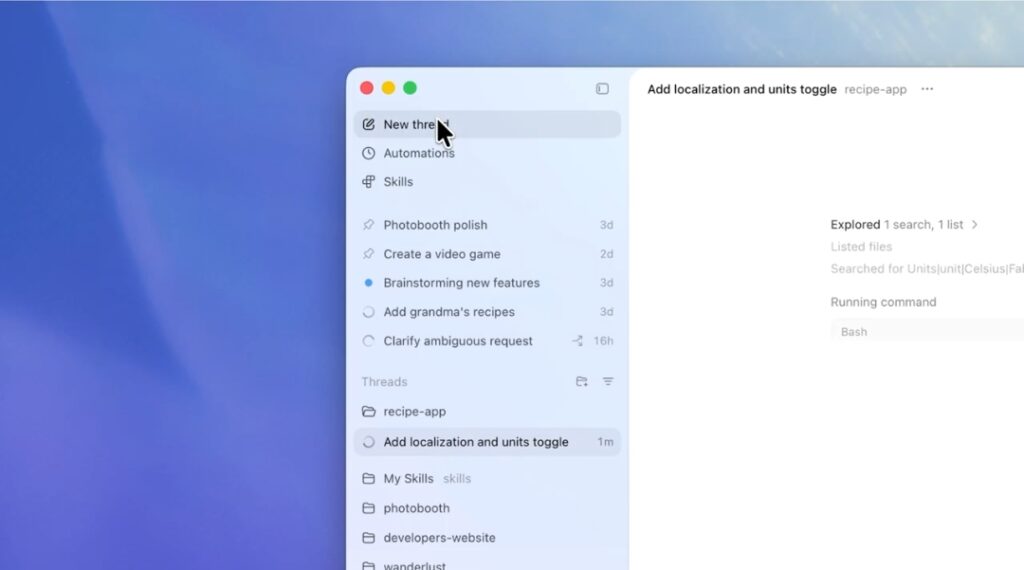
Codex stands out with its robust feature set tailored for modern engineering needs. Here’s a breakdown of its primary functionalities:
- Multi-Agent Parallelism: Run several AI agents simultaneously on isolated branches, enabling concurrent development without merge issues.
- Custom Skills Integration: Package tools like Vercel or Figma into reusable skills, aligning with team conventions for prototyping, documentation, and more.
- Background Automations: Set up scheduled workflows for tasks such as bug scanning, issue triage, and CI/CD monitoring, running unprompted to minimize manual intervention.
- Quality Enhancement Tools: Conduct thorough designs, comprehensive testing, and insightful code reviews to catch issues early and ensure high standards.
- Cross-Platform Access: Use via the desktop app, IDE extensions, or terminal, all synced through a ChatGPT account for unified experience.
These elements make Codex a versatile partner, extending beyond mere code generation to full-cycle development support.
Pricing and Accessibility Options
To encourage widespread adoption, OpenAI has made Codex accessible through various ChatGPT plans. The following table outlines the current offerings:
| Plan Type | Access Level | Rate Limits | Availability Notes |
|---|---|---|---|
| Free/Go | Basic trial access | Standard | Limited time promotion |
| Plus/Pro | Full features | Doubled (2x) | For 2 months post-launch |
| Business/Enterprise/Edu | Advanced integrations | Doubled (2x) | Enhanced for team use |
This structure lowers barriers for individual developers while scaling for enterprise needs.
Leadership Endorsements and Market Context
OpenAI leaders have hailed Codex as a pivotal advancement. CEO Sam Altman expressed surprise at its impact, stating it’s a “bigger step forward than imagined” and shared personal experiences where the app suggested superior features during his own projects.
President Greg Brockman praised its “killer feature” in parallelism and called it “really good,” noting a shift from traditional tools like terminal and Emacs after using it.
While celebrated for accelerating workflows, some highlight its initial macOS exclusivity and emerging competition. Tools like Cursor AI offer intuitive editing interfaces, and Anthropic’s Claude provides strong coding assistance with ethical safeguards.
Nonetheless, Codex’s focus on agentic, parallel operations positions it as a game-changer for developers seeking exponential productivity in an increasingly AI-augmented field. As OpenAI continues iterating, Codex promises to redefine collaborative coding paradigms.