
What is ChatGPT?
ChatGPT is OpenAI’s AI chatbot launched in November 2022, powered by GPT models for natural conversations, writing, coding, analysis, and multimodal tasks like voice and image processing.
When was ChatGPT first released?
ChatGPT was publicly launched on November 30, 2022, as a research preview using GPT-3.5, and has since evolved through multiple model generations.
How many users does ChatGPT have in 2026?
As of early 2026, ChatGPT has over 800 million weekly active users, with estimates of 2.8 billion monthly active users from traffic data.
Is ChatGPT free to use?
Yes, basic access is free with limits; paid plans include Go ($8/month), Plus ($20/month), and Pro ($200/month) for higher limits, advanced models, and features.
What is the latest model in ChatGPT?
The current flagship is GPT-5.2 series (Instant, Thinking, Pro variants) released in late 2025, with knowledge cutoff August 2025 and strong reasoning capabilities.
Does ChatGPT support voice and images?
Yes, it includes real-time voice conversations, image analysis/uploads, and DALL-E image generation integrated into chats.
What are ChatGPT’s pricing plans in 2026?
Free (limited), Go ($8/month for expanded access), Plus ($20/month for advanced reasoning), Pro ($200/month for maximum compute and previews).
Who can use ChatGPT commercially?
Paid plans (Plus/Pro) support commercial use with higher limits; free tier is for personal/non-commercial purposes.

ChatGPT

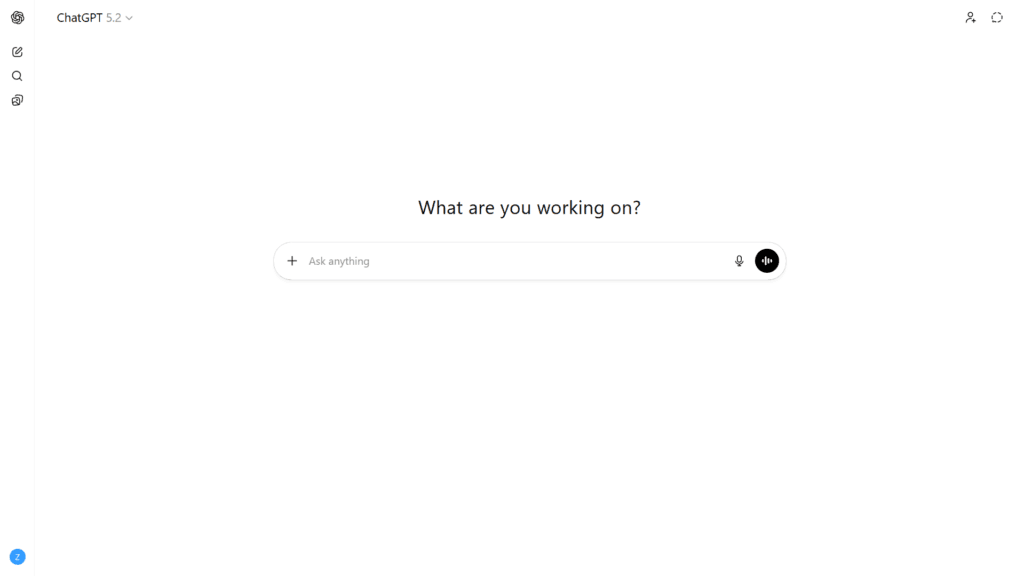
About This AI
ChatGPT is OpenAI’s widely used AI chatbot launched on November 30, 2022, providing conversational responses, creative writing, coding help, translations, and more.
It leverages successive models from GPT-3.5 to the latest GPT-5.2 series (Instant, Thinking, Pro variants) for superior reasoning, long-context handling (up to 400K tokens), multimodal capabilities (text, image analysis, voice conversations), and reduced hallucinations.
Users can upload files for analysis, use memory for personalized context, generate images via DALL-E integration, and access real-time web browsing in paid tiers.
ChatGPT supports web, mobile apps (iOS/Android), desktop, and voice mode, making it accessible for casual queries, professional tasks, education, and entertainment.
With over 800 million weekly active users as of early 2026, it remains the most popular consumer AI tool globally.
The freemium model offers basic access for free, while paid plans (Go $8/month, Plus $20/month, Pro $200/month) provide higher limits, advanced models, priority access, and features like custom GPTs, data analysis, and API usage.
OpenAI continues rapid updates, including personality refinements, visual responses, and safety improvements, positioning ChatGPT as a versatile daily assistant for millions worldwide.
Key Features
- Conversational intelligence: Natural, context-aware responses with memory for ongoing personalization
- Multimodal capabilities: Text, voice conversations, image analysis, file uploads, and DALL-E image generation
- Advanced reasoning models: GPT-5.2 variants (Instant for speed, Thinking/Pro for depth) with adaptive effort levels
- Long-context handling: Up to 400,000 tokens for analyzing large documents or extended conversations
- Real-time web browsing: Access current information in paid tiers for up-to-date answers
- Custom GPTs and tools: Build/share specialized assistants and integrate with third-party actions
- Voice mode: Real-time spoken interactions with natural back-and-forth dialogue
- Data analysis and visualization: Process spreadsheets, generate charts, and explain insights
- Personality customization: Adjust tone, warmth, emoji use, and style for tailored experiences
- Cross-platform access: Seamless use on web, mobile apps, desktop, and integrations like Microsoft Copilot
Price Plans
- Free ($0): Basic access to GPT-5.2 Instant with message limits, core features, and occasional ads testing
- ChatGPT Go ($8/Month): Expanded access to GPT-5.2 Instant, more messages, uploads, image creation, and reduced limits
- ChatGPT Plus ($20/Month): Full GPT-5.2 Thinking access, higher limits, advanced reasoning, custom GPTs, data analysis, priority features
- ChatGPT Pro ($200/Month): Maximum access to GPT-5.2 Pro, unlimited high-compute reasoning, early previews, and top-tier performance
Pros
- Massive adoption and reliability: Over 800 million weekly users demonstrate proven performance
- Versatile for all needs: Excels in writing, coding, learning, brainstorming, and professional tasks
- Freemium accessibility: Strong free tier with basic GPT-5.2 access; affordable upgrades
- Continuous improvements: Frequent updates enhance reasoning, safety, and features
- Multimodal strength: Handles text, voice, vision, and files effectively
- Strong ecosystem: Integrates with apps, API, and tools like DALL-E and browsing
- High benchmark performance: Leads in reasoning, coding, and general intelligence metrics
Cons
- Usage limits on free: Caps on messages and advanced features push toward paid plans
- Higher tiers expensive: Pro at $200/month for maximum power may deter casual users
- Occasional hallucinations: Still possible on complex or ambiguous queries
- Knowledge cutoff: Relies on browsing for post-August 2025 events
- Privacy considerations: Data used for training unless opted out (paid privacy options)
- Internet required: No offline mode for full functionality
- Model retirements: Older versions phased out periodically
Use Cases
- Everyday assistance: Quick answers, brainstorming, translations, and explanations
- Content creation: Writing articles, emails, stories, or social media posts
- Coding and debugging: Generate, explain, or fix code in various languages
- Learning and education: Tutor-style explanations, study help, concept breakdowns
- Professional productivity: Summarize documents, analyze data, draft reports
- Creative projects: Idea generation, image creation, role-playing scenarios
- Personal planning: Travel itineraries, meal plans, goal setting
Target Audience
- Students and learners: For homework help, explanations, and skill-building
- Professionals and workers: Boosting productivity in writing, coding, analysis
- Content creators: Generating ideas, drafts, and visuals
- Developers and engineers: Coding assistance and debugging
- Casual users: Daily questions, fun chats, and quick tasks
- Business teams: Collaboration via custom GPTs and integrations
How To Use
- Visit site: Go to chatgpt.com or open the mobile/desktop app
- Start chatting: Type any question or prompt; no signup needed for basic free use
- Upload content: Add images, files, or voice input for multimodal queries
- Select model: Paid users choose Instant/Thinking/Pro from dropdown
- Refine responses: Follow up, ask to 'be more concise' or 'explain step-by-step'
- Use memory: ChatGPT remembers context; manage in settings
- Access advanced features: Upgrade to Plus/Pro for higher limits and extras
How we rated ChatGPT
- Performance: 4.9/5
- Accuracy: 4.7/5
- Features: 4.9/5
- Cost-Efficiency: 4.6/5
- Ease of Use: 4.9/5
- Customization: 4.7/5
- Data Privacy: 4.4/5
- Support: 4.5/5
- Integration: 4.8/5
- Overall Score: 4.8/5
ChatGPT integration with other tools
- Mobile Apps: Native iOS and Android apps for on-the-go chatting and voice mode
- Desktop App: Standalone Windows/macOS app for seamless desktop experience
- OpenAI API: Developer access to integrate ChatGPT models into custom apps and services
- Microsoft Ecosystem: Powers Copilot in Bing, Edge, Windows, and Microsoft 365 tools
- Third-Party Platforms: Compatible with Zapier, Make, LangChain, and custom GPT actions
Best prompts optimised for ChatGPT
- Explain quantum computing like I'm 12 years old, using simple analogies and step-by-step examples
- Write a professional cover letter for a software engineer position, tailored to this job description: [paste description]
- Generate Python code to analyze this CSV dataset [upload file] and create visualizations of key trends
- Translate this paragraph from English to formal Japanese for a business proposal: [insert text]
- Role-play as a debate opponent arguing against the topic 'AI will replace human jobs' – be persuasive and evidence-based
FAQs
Newly Added Tools







About Author