



Zelili AI

Claude Opus 4.6

Anthropic’s Most Capable Frontier Model – Hybrid Reasoning for Coding, Agents, and Enterprise Workflows with 1M Token Context

About This AI

Claude Opus 4.6 is Anthropic’s latest flagship model released on February 5, 2026, building on Opus 4.5 with major gains in coding reliability, agentic task endurance, large codebase handling, and self-debugging.

It introduces a 1 million token context window in beta (first for Opus-class), enabling deep analysis of massive codebases, documents, or multi-source data without losing coherence.

The model excels at complex multi-step planning, autonomous agent execution, financial/legal research, spreadsheet/presentation creation, vulnerability detection, cybersecurity investigations, and multidisciplinary reasoning.

New features include agent teams for parallel task splitting, adaptive thinking (auto-adjusts reasoning depth), effort controls (low to max), context compaction for long sessions, and integrations like Claude in Excel/PowerPoint (research preview).

It achieves state-of-the-art scores on Terminal-Bench 2.0 (agentic coding), Humanity’s Last Exam, GDPval-AA (outperforms GPT-5.2 by ~144 Elo), BrowseComp, and long-context retrieval (76 percent on 8-needle 1M MRCR v2).

Available on claude.ai (Pro/Max/Team/Enterprise), Claude API (model claude-opus-4-6), and cloud platforms with unchanged pricing ($5/$25 per million tokens input/output).

Opus 4.6 emphasizes safety with low misalignment and extensive testing, making it ideal for professional engineering, high-stakes enterprise tasks, and advanced agentic workflows where precision and reliability matter most.

Key Features

  1. 1M token context window (beta): Processes extremely large inputs for codebases, documents, or multi-file analysis
  2. Hybrid reasoning: Combines careful planning, sustained agentic tasks, and self-correction for reliability
  3. Agent teams: Splits complex jobs into parallel sub-tasks for faster execution
  4. Adaptive thinking and effort controls: Auto-adjusts or manually sets reasoning depth (low/medium/high/max)
  5. Context compaction (beta): Summarizes history to maintain coherence in ultra-long sessions
  6. Advanced coding capabilities: Better large codebase navigation, debugging, review, and vulnerability detection
  7. Professional tools integration: Claude in Excel and PowerPoint (research preview) for data analysis and presentations
  8. Multidisciplinary reasoning: Excels in finance, legal, research, cybersecurity, and complex evaluations
  9. 128K output tokens: Generates very long, detailed responses in one pass
  10. Safety-focused design: Low misalignment, extensive testing, and cybersecurity safeguards

Price Plans

  1. Free ($0): Limited access to lighter Claude models; Opus 4.6 not available on free tier
  2. Pro/Max ($20/Month and up): Access to Claude Opus 4.6 on claude.ai with higher limits and features
  3. Team/Enterprise (Custom): Full Opus 4.6 access, API priority, research previews (Excel/PowerPoint), and enterprise security; API pricing $5/$25 per million tokens (input/output), double for >200K prompts

Pros

  1. Frontier performance: Leads on agentic coding, long-context retrieval, and economically valuable tasks
  2. Massive context capacity: 1M tokens enables unprecedented depth for professional workflows
  3. Agentic excellence: Sustains long tasks, teams agents, and self-corrects reliably
  4. Strong coding focus: Superior planning, debugging, and large codebase handling
  5. Enterprise-ready: Integrates with productivity tools and API for scalable use
  6. Safety and reliability: Thorough evaluations ensure low-risk deployment
  7. Consistent pricing: No increase despite major upgrades

Cons

  1. Premium access only: Full capabilities require Pro/Max/Team/Enterprise plans
  2. Beta features: 1M context, compaction, and some integrations in preview stage
  3. Higher cost for long inputs: Premium pricing (double) for prompts over 200K tokens
  4. US-only inference premium: 1.1x pricing for US region
  5. Compute-intensive: Max effort mode slower on complex queries
  6. No free tier full access: Basic Claude free users get lighter models
  7. Knowledge cutoff: Limited to training data (not specified, likely recent but not real-time)

Use Cases

  1. Software engineering: Large codebase review, debugging, vulnerability detection, refactors
  2. Agentic workflows: Multi-step autonomous tasks, agent teams for parallel execution
  3. Financial/legal analysis: Deep research, modeling, document processing
  4. Research and reasoning: Multidisciplinary problems, long-context synthesis
  5. Productivity tools: Spreadsheet analysis, presentation creation, Excel/PowerPoint integration
  6. Cybersecurity: Investigations, threat modeling, secure code review
  7. Enterprise automation: High-stakes planning, compliance, and decision support

Target Audience

  1. Professional developers: Needing reliable coding and large codebase handling
  2. AI agent builders: Creating complex autonomous systems and teams
  3. Financial/legal professionals: Deep analysis and research tasks
  4. Researchers: Multidisciplinary reasoning and long-context problems
  5. Enterprise teams: Productivity integrations and secure workflows
  6. Power users: Requiring max intelligence for demanding work

How To Use

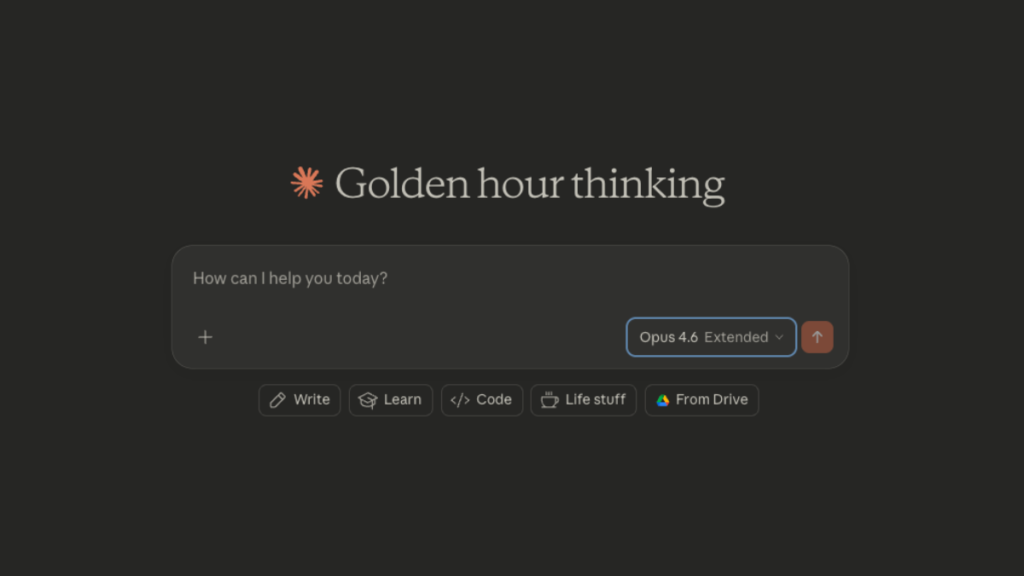
  1. Access on claude.ai: Log in to claude.ai, select Claude Opus 4.6 from model picker (Pro/Max/Team/Enterprise required)
  2. API usage: Use claude-opus-4-6 model ID in Claude API calls via platform.anthropic.com
  3. Set effort level: Prompt with 'use high effort' or configure in API for deeper reasoning
  4. Handle large context: Upload files or paste massive code/docs; beta 1M context auto-engages
  5. Use agent teams: In Claude Code, enable agent teams for parallel task handling
  6. Integrate tools: Leverage Cowork, Excel, or PowerPoint previews for productivity
  7. Monitor output: Use context compaction for long sessions; review self-corrections

How we rated Claude Opus 4.6

  • Performance: 4.9/5
  • Accuracy: 4.8/5
  • Features: 4.9/5
  • Cost-Efficiency: 4.5/5
  • Ease of Use: 4.6/5
  • Customization: 4.7/5
  • Data Privacy: 4.8/5
  • Support: 4.7/5
  • Integration: 4.8/5
  • Overall Score: 4.8/5

Claude Opus 4.6 integration with other tools

  1. Claude API: Full developer access for custom apps, agents, and enterprise integrations
  2. Cloud Platforms: Available on major providers like AWS, Google Cloud, Snowflake Cortex AI
  3. Productivity Suites: Claude in Excel and PowerPoint (research preview) for data analysis and presentations
  4. GitHub Copilot: Integrated as model option for coding assistance in IDEs
  5. Cowork: Autonomous multitasking environment for agentic workflows

Best prompts optimised for Claude Opus 4.6

  1. You are a senior software engineer. Review this large codebase [paste files/context], identify vulnerabilities, suggest refactors, and write improved code with explanations using high effort and full 1M context.
  2. Act as an expert financial analyst. Analyze this quarterly report [upload PDF/docs], build a detailed model in Excel format, forecast trends, and create a PowerPoint summary slide deck.
  3. Use agent teams to research and solve this complex legal question: [detailed query]. Break into sub-tasks, cross-reference sources, and provide a comprehensive reasoned opinion.
  4. Perform deep multidisciplinary reasoning on this scientific problem: [insert query]. Use adaptive thinking, chain-of-thought, and max effort to arrive at an accurate solution.
  5. Debug and fix this intricate bug in the following system [paste code/context]. Plan steps, test hypotheses, and output corrected code with explanations.
Claude Opus 4.6 pushes the frontier with exceptional coding, agentic reliability, and a groundbreaking 1M context window, making it ideal for complex professional tasks in engineering, finance, and research. Safety-focused and performant, it excels in high-stakes workflows, though premium access limits broader use. A top choice for serious users needing precision and depth.

FAQs

  • What is Claude Opus 4.6?

    Claude Opus 4.6 is Anthropic’s most capable model released on February 5, 2026, featuring advanced coding, agent teams, 1M token context (beta), and superior reasoning for professional tasks.

  • When was Claude Opus 4.6 released?

    It was released on February 5, 2026, with immediate availability on claude.ai, API, and cloud platforms.

  • What is the context window for Claude Opus 4.6?

    It supports a 1 million token context window in beta, with standard 200K, enabling massive codebases or document analysis.

  • How do I access Claude Opus 4.6?

    Available on claude.ai for Pro/Max/Team/Enterprise users; use claude-opus-4-6 via Claude API; not on free tier.

  • What are the key improvements in Claude Opus 4.6?

    Better coding reliability, agent teams for parallel tasks, adaptive thinking, context compaction, and integrations like Excel/PowerPoint previews.

  • How does Claude Opus 4.6 pricing work?

    API pricing remains $5/$25 per million input/output tokens; double for prompts over 200K; consumer access via paid Claude plans.

  • What benchmarks does Claude Opus 4.6 lead on?

    It tops Terminal-Bench 2.0, Humanity’s Last Exam, GDPval-AA (beats GPT-5.2), BrowseComp, and excels in long-context retrieval.

  • Is Claude Opus 4.6 safe to use?

    Anthropic emphasizes low misalignment, extensive safety testing, and cybersecurity safeguards; safety profile matches or exceeds frontier models.


Newly Added Tools​

Qodo AI

$0/Month

Codiga

$10/Month

Tabnine

$59/Month

CodeRabbit

$0/Month
Claude Opus 4.6 Alternatives

Cognosys AI

$0/Month

AI Perfect Assistant

$17/Month

Intern-S1-Pro

$0/Month

Claude Opus 4.6 Reviews

0.0
0.0 out of 5 stars (based on 0 reviews)
Excellent0%
Very good0%
Average0%
Poor0%
Terrible0%

There are no reviews yet. Be the first one to write one.