
What is Fload?
Fload is an AI-powered analytics tool acting as an ‘AI Employee’ for mobile apps, providing instant insights from connected data sources via natural language questions.
When was Fload launched?
Fload officially launched around December 9, 2025, with initial announcements and blog posts highlighting its features for app operators.
Is Fload free to use?
It likely offers a free tier with limits; full features require paid plans (pricing via demo/signup). No exact free details public without account.
What data sources does Fload connect to?
Fload integrates with iOS (App Store Connect), Android (Google Play), Web, Ads platforms, Analytics tools, Stripe, and more for revenue, engagement, and performance data.
How does Fload work?
Connect sources in under 60 seconds, ask questions in plain English, and get instant charts/reports/insights with anomaly detection and recommendations.
Who is Fload best for?
Mobile app developers, growth teams, product managers, startups, and operators needing simple, no-code analytics for revenue, users, ads, and ASO.
Does Fload support integrations?
Yes, it pushes insights to Slack, Microsoft Teams, and connects deeply with app/ad/analytics platforms for consolidated monitoring.
What makes Fload unique?
It’s tailored as a conversational AI for mobile app data, automating analysis and alerts like a dedicated analytics team member without technical setup.

Fload

About This AI
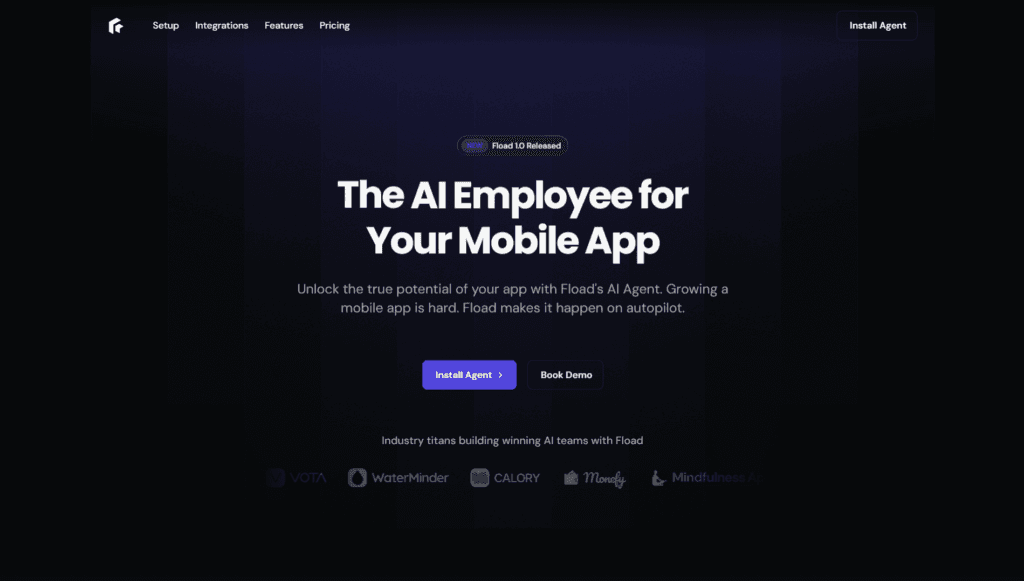
Fload is an AI-powered analytics platform designed specifically for mobile app operators and growth teams.
It acts as an ‘AI Employee’ by connecting multiple data sources from iOS, Android, Web, Ads, Analytics, revenue tools, and more in under 60 seconds with no coding required.
Users simply ask natural language questions like ‘Why did my revenue drop last week?’ or ‘Show me top performing countries’, and Fload analyzes data instantly to deliver charts, tables, reports, and insights.
Key strengths include 24/7 monitoring with anomaly detection (e.g., crashes, revenue dips), proactive recommendations, smart widgets for real-time KPIs, and seamless sharing of outputs to Slack, Teams, or other tools.
It consolidates fragmented data from 10-15 tools into one conversational interface, saving significant time on manual reporting and trend analysis.
Launched around December 2025, Fload targets fast-growing apps, startups, and teams needing quick, non-technical analytics.
With testimonials from app CEOs and growth leads praising its ease and impact, it positions as a tireless partner for diagnosing issues (like ASO problems) and driving growth.
The freemium model likely includes a free tier for basic use, with paid plans unlocking higher limits, advanced features, and team collaboration (pricing details via demo or signup).
Key Features
- Seamless no-code setup: Connect data sources in under 60 seconds without technical skills
- Natural language querying: Ask questions in plain English for instant analysis and visualizations
- Multi-source data consolidation: Integrates iOS, Android, Web, Ads, Analytics, Stripe, App Store Connect, and more
- Real-time insights and charts: Generates tables, graphs, reports, and KPIs on demand
- 24/7 anomaly detection: Monitors performance and alerts on issues like crashes or revenue drops
- Proactive recommendations: Suggests fixes and growth opportunities automatically
- Smart widgets and dashboards: Customizable real-time metrics for quick overview
- Collaboration and sharing: Export insights to Slack, Teams, or other tools
- Task automation: Handles reporting, trend spotting, and diagnostics without manual effort
Price Plans
- Free ($0): Basic access likely available with query or data limits (exact details via signup)
- Paid Plans (Custom / Demo required): Tiered subscriptions for unlimited queries, advanced features, team access, and higher data volumes; pricing not publicly listed
Pros
- Extremely fast setup: Under 60 seconds to connect and start asking questions
- ChatGPT-like simplicity: No coding or SQL needed for deep app analytics
- Time-saving automation: Eliminates juggling multiple dashboards and manual reporting
- Actionable and proactive: Goes beyond data display to suggest improvements and detect issues
- Targeted for mobile apps: Tailored insights for revenue, engagement, ads, ASO, and more
- Strong early feedback: Praised by app founders for competitive edge and ease
Cons
- Pricing not transparent: Requires demo or signup to see plans; no public free tier details
- New tool: Launched late 2025 with limited long-term reviews or proven scale
- Dependency on integrations: Effectiveness relies on connected data sources quality
- Potential limits on free: Likely caps on queries or features in non-paid plans
- No offline access: Web-based requiring internet for real-time analysis
- Focused niche: Primarily for mobile app operators; less utility outside that
Use Cases
- App performance monitoring: Track KPIs, detect anomalies in crashes/revenue/downloads
- Growth analysis: Identify trends in user acquisition, retention, and monetization
- ASO and marketing optimization: Diagnose issues and get suggestions for improvement
- Revenue and ad insights: Analyze spend, ROI, and country-level performance
- Team reporting: Generate quick reports and share with stakeholders
- Competitive benchmarking: Compare metrics and find growth opportunities
- Daily check-ins: Get proactive alerts and summaries without manual digging
Target Audience
- Mobile app developers and indie makers: Needing simple analytics without engineering overhead
- Growth teams and marketers: Focused on acquisition, retention, and monetization
- Startup founders and CEOs: Wanting quick insights into app health
- Product managers: Tracking user behavior and feature impact
- App businesses: Consolidating data from multiple platforms
- Non-technical operators: Avoiding complex BI tools
How To Use
- Visit site: Go to fload.com and sign up (likely quick onboarding)
- Connect data: Install agent and link sources like App Store Connect, Google Play, Stripe, ad platforms
- Ask questions: Use chat interface to query in natural language (e.g., 'Show revenue by country')
- View insights: Receive instant charts, tables, or reports with explanations
- Set up monitoring: Enable anomaly alerts and proactive suggestions
- Share outputs: Export or send results to Slack/Teams/email
- Upgrade if needed: Move to paid for unlimited queries and advanced features
How we rated Fload
- Performance: 4.5/5
- Accuracy: 4.6/5
- Features: 4.7/5
- Cost-Efficiency: 4.4/5
- Ease of Use: 4.9/5
- Customization: 4.3/5
- Data Privacy: 4.5/5
- Support: 4.4/5
- Integration: 4.7/5
- Overall Score: 4.6/5
Fload integration with other tools
- App Stores: App Store Connect, Google Play Console for downloads, revenue, reviews
- Ad Platforms: Google Ads, Meta Ads, Apple Search Ads for spend and performance
- Analytics Tools: Firebase, Amplitude, Mixpanel for user behavior data
- Payment Systems: Stripe, RevenueCat for in-app purchases and subscriptions
- Collaboration Tools: Slack, Microsoft Teams for sharing insights and alerts
Best prompts optimised for Fload
- Why did my app revenue drop last week? Show breakdown by country and platform.
- What are my top performing acquisition sources right now? Include CPI and ROAS.
- Detect any anomalies in crash rates or user retention this month.
- Generate a weekly performance report with key metrics and recommendations.
- Compare user engagement across iOS and Android versions in the last 30 days.
FAQs
Newly Added Tools






About Author