


Zelili AI

Kimi K2.5

Moonshot AI’s Flagship Open-Source Multimodal Agentic Model – Native Vision, 1T MoE Power, and Swarm Execution for Real-World Tasks
Tool Users
N/A
0.0
๐Ÿ‘ 133

About This AI

Kimi K2.5 is Moonshot AI’s most advanced open-source large language model, officially released on January 27, 2026.

Built as a native multimodal Mixture-of-Experts architecture with 1 trillion total parameters (32 billion active per token), it was continually pretrained on approximately 15 trillion mixed visual and text tokens atop Kimi-K2-Base.

This design enables seamless integration of vision and language understanding, supporting image and video inputs alongside text for cross-modal reasoning, visual knowledge tasks, and agentic tool use grounded in visuals.

Key capabilities include instant and thinking modes for quick or deep responses, conversational chat, autonomous agent workflows, and innovative Agent Swarm that coordinates up to 100 specialized sub-agents in parallel for complex, long-horizon tasks, reducing execution time significantly (up to 4.5x faster in some cases) while maintaining high performance.

It excels in coding (especially visual-to-code), document processing, research, agentic benchmarks (SOTA open-source scores on HLE, BrowseComp, SWE-Bench), and general intelligence, often matching or surpassing proprietary leaders like GPT-5.2, Claude 4.5 Opus, and Gemini 3 Pro on key tests.

With a 256K-262K token context window, native INT4 quantization for efficiency, and support for ToolCalls, JSON Mode, context caching, and internet search, it’s highly versatile for developers, researchers, and enterprises.

Available free on kimi.com (with limits), via Moonshot API (token pricing), open weights on Hugging Face for local deployment, and through third-party providers like OpenRouter or NVIDIA NIM.

As a fully open-source frontier model under MIT license (with attribution for large-scale use), Kimi K2.5 represents a major leap in accessible, high-performance multimodal and agentic AI.

Key Features

  1. Native multimodal architecture: Processes text, images, and video inputs natively for cross-modal reasoning and visual understanding
  2. 1T MoE with 32B active: Efficient inference using sparse activation from 1 trillion parameters
  3. Agent Swarm execution: Coordinates up to 100 parallel sub-agents for complex, long-horizon workflows with massive speed gains
  4. Thinking and instant modes: Switch between fast responses and deep reasoning with adjustable effort levels
  5. 256K context window: Handles very long documents, conversations, or codebases without losing details
  6. Visual-to-code capabilities: Generates production-ready code from UI designs, video demos, or screenshots
  7. Advanced agentic tool use: Autonomous planning, multi-step task execution, and tool calling grounded in visuals
  8. High benchmark performance: Open-source SOTA on agent, coding, vision, and general tasks (e.g., SWE-Bench, HLE, BrowseComp)
  9. Context caching and optimizations: Automatic cache hits for lower costs and faster repeated queries
  10. Open weights and local deployment: Download from Hugging Face for private or customized use with vLLM/SGLang

Price Plans

  1. Free ($0): Access on kimi.com with usage limits, basic chat/thinking modes; open weights download from Hugging Face for local use (no fees)
  2. API Pay-as-you-go ($0.60/M input, $3.00/M output tokens): Full access to Kimi K2.5 with cache pricing ($0.10/M hit), 256K context, ToolCalls, JSON Mode, search; ideal for developers
  3. Premium Membership (Varies ~$10-20/Month estimated): Higher limits, priority access, advanced agent swarm features on kimi.com/app (exact tiers not detailed publicly)

Pros

  1. Frontier open-source performance: Beats or matches GPT-5.2, Claude 4.5, Gemini 3 in many agentic, coding, and vision benchmarks
  2. Native multimodality: True vision-language integration from pretraining for better visual tasks than add-on approaches
  3. Agent Swarm innovation: Parallel sub-agents enable scalable complex problem-solving at lower cost and time
  4. Free access with limits: Try on kimi.com without payment; open weights for local/free deployment
  5. Cost-efficient API: Token pricing significantly cheaper than Western proprietary equivalents
  6. Long context reliability: 256K window supports extensive documents or multi-turn reasoning
  7. Developer-friendly: API, CLI, local run support, and community integrations via Hugging Face

Cons

  1. Requires paid API for heavy use: Free tier has limits; high-volume needs token payments
  2. Local deployment demanding: 1T model (even quantized) needs substantial GPU resources
  3. Recent release: Community tools, fine-tunes, and ecosystem still emerging
  4. Primarily Chinese-optimized: Strong in global tasks but may have slight edge in Chinese benchmarks
  5. Agent Swarm in beta: Advanced swarm features preview/limited access in early rollout
  6. No offline mobile app full power: Core experience web/API-based; mobile app for lighter use
  7. Potential rate limits: Free and low-tier API may throttle during peak demand

Use Cases

  1. Visual coding and development: Turn UI screenshots, video demos, or designs into functional code
  2. Complex research and analysis: Agent swarm for parallel data gathering, synthesis, and long-horizon tasks
  3. Document and multimodal processing: Analyze images, videos, charts alongside text for insights
  4. Agentic workflows: Automate multi-step projects with tool use and sub-agent coordination
  5. Local/private deployment: Run open weights on-premises for sensitive or custom applications
  6. Cost-effective frontier testing: Benchmark and prototype against proprietary models at fraction of cost
  7. Creative and technical content: Generate structured outputs from mixed visual-text inputs

Target Audience

  1. Developers and coders: Visual-to-code, agentic programming, efficient local inference
  2. AI researchers: Experimenting with multimodal/agentic open-source frontiers
  3. Enterprises and teams: Scalable agent workflows, API integration, cost savings
  4. Content creators: Multimodal analysis and generation for media/research
  5. Budget-conscious power users: High performance without proprietary pricing
  6. Chinese/global AI enthusiasts: Leveraging Moonshot's strong domestic benchmarks

How To Use

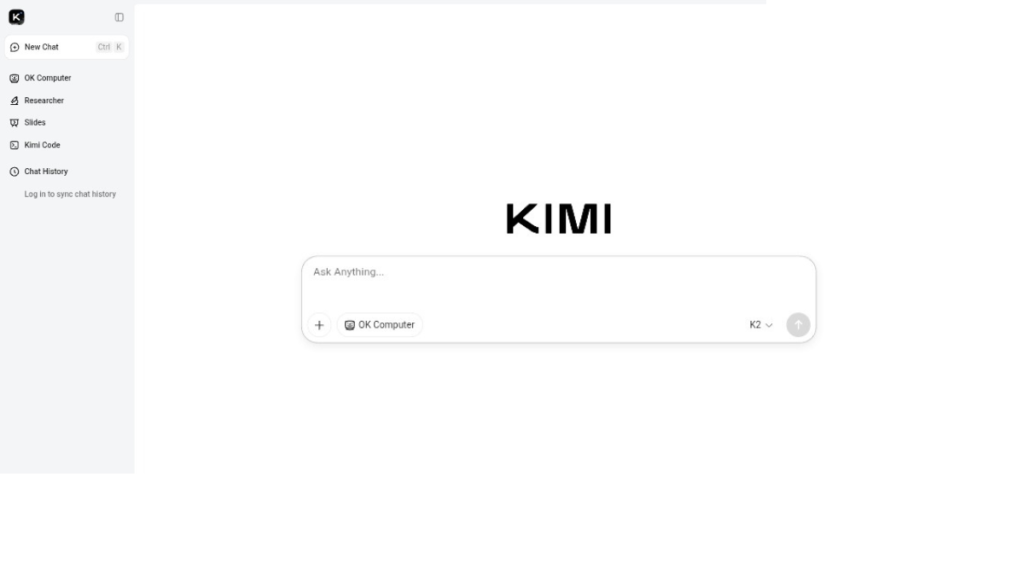
  1. Web access: Visit kimi.com/en or app, start chatting; select Kimi K2.5 mode if available
  2. Try thinking/agent: Prompt with complex tasks; use 'think hard' or agent mode for depth/swarm
  3. Upload visuals: Add images/videos to queries for multimodal analysis or code gen
  4. API integration: Sign up at platform.moonshot.ai, get key, call with model 'kimi-k2.5'
  5. Local deployment: Download weights from Hugging Face moonshotai/Kimi-K2.5; run with vLLM/SGLang
  6. Optimize prompts: Specify mode (thinking/instant), use JSON/ToolCalls for structured output
  7. Monitor costs: Use cache for repeated contexts; start with free tier before scaling

How we rated Kimi K2.5

  • Performance: 4.9/5
  • Accuracy: 4.8/5
  • Features: 4.9/5
  • Cost-Efficiency: 4.9/5
  • Ease of Use: 4.6/5
  • Customization: 4.7/5
  • Data Privacy: 4.8/5
  • Support: 4.5/5
  • Integration: 4.7/5
  • Overall Score: 4.8/5

Kimi K2.5 integration with other tools

  1. Kimi Web and App: Browser chat and mobile access with seamless model switching
  2. Moonshot API Platform: Full programmatic access with ToolCalls, JSON Mode, caching, and search
  3. Hugging Face: Open weights download for local/private deployment and community fine-tunes
  4. Third-Party Providers: NVIDIA NIM, OpenRouter, Fireworks, DeepInfra for hosted inference
  5. Agent Frameworks: Compatible with LangChain, LlamaIndex, or custom agent swarms via API

Best prompts optimised for Kimi K2.5

  1. Analyze this UI screenshot [upload image] and generate clean React code with Tailwind CSS for the exact layout and interactions shown, including responsive design
  2. Using agent swarm, research and summarize the top 10 AI trends in 2026, pulling real-time sources, cross-verifying data, and compiling into a detailed report with citations
  3. Watch this short video demo [upload/link] of a web app workflow and recreate the functionality in Python Flask backend with React frontend, step by step
  4. Think deeply: Solve this complex math/physics problem with visual diagram explanation [describe or upload sketch], showing all reasoning steps and final answer in LaTeX
  5. Act as my coding agent: Debug and optimize this large codebase snippet [paste code], identify bugs, suggest refactors, and explain changes with visual diffs if possible
Kimi K2.5 stands out as a powerful open-source multimodal model from Moonshot AI, excelling in visual understanding, coding, agentic workflows, and swarm execution. Released January 2026, it delivers frontier performance at dramatically lower costs than proprietary rivals. Free access with limits and open weights make it highly accessible for developers and researchers pushing agentic and vision AI boundaries.

FAQs

  • What is Kimi K2.5?

    Kimi K2.5 is Moonshot AI’s flagship open-source multimodal model released January 27, 2026, featuring native vision, 1T MoE architecture, agent swarm capabilities, and SOTA performance in coding, agentic tasks, and general intelligence.

  • When was Kimi K2.5 released?

    Moonshot AI officially released and open-sourced Kimi K2.5 on January 27, 2026, following announcements in late January.

  • Is Kimi K2.5 free to use?

    Yes, free access on kimi.com with usage limits; open weights available on Hugging Face for local deployment at no cost. API is pay-per-token ($0.60/M input, $3.00/M output).

  • What are the key features of Kimi K2.5?

    Native multimodal (text/image/video), 256K context, thinking modes, Agent Swarm for parallel sub-agents, visual-to-code generation, and top benchmarks in agentic/coding/vision tasks.

  • How does Kimi K2.5 compare to other models?

    It achieves open-source SOTA and often beats or matches GPT-5.2, Claude 4.5 Opus, and Gemini 3 Pro on agent, coding, and vision benchmarks, at much lower cost.

  • What is Agent Swarm in Kimi K2.5?

    A breakthrough feature allowing self-directed coordination of up to 100 specialized sub-agents in parallel for complex tasks, speeding up execution by up to 4.5x.

  • How can I access Kimi K2.5?

    Use on kimi.com (web/app), Moonshot API (platform.moonshot.ai), download weights from Hugging Face, or third-party hosts like OpenRouter/NVIDIA NIM.

  • What is the context window for Kimi K2.5?

    It supports a 256K-262K token context window, enabling very long documents, conversations, or codebases.


Newly Added Toolsโ€‹

Qodo AI

$0/Month

Codiga

$10/Month

Tabnine

$59/Month

CodeRabbit

$0/Month
Kimi K2.5 Alternatives

Cognosys AI

$0/Month

AI Perfect Assistant

$17/Month

Intern-S1-Pro

$0/Month

Kimi K2.5 Reviews

0.0
0.0 out of 5 stars (based on 0 reviews)
Excellent0%
Very good0%
Average0%
Poor0%
Terrible0%

There are no reviews yet. Be the first one to write one.