



Zelili AI

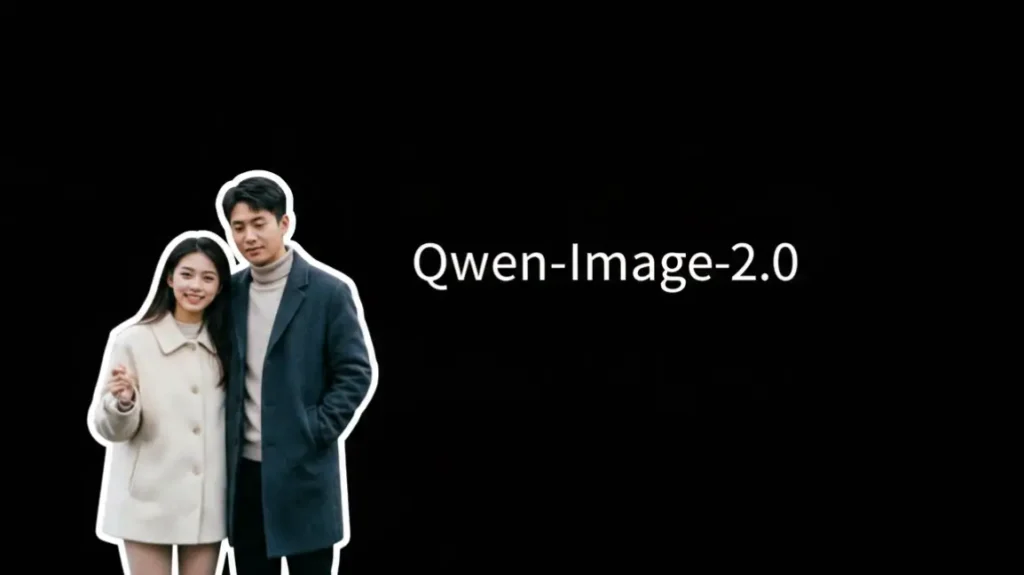
Qwen-Image-2.0

Unified Open-Source Image Generation and Editing Model with Native 2K and Professional Typography
Tool Users
N/A
0.0
๐Ÿ‘ 8

About This AI

Qwen-Image-2.0 is Alibaba’s next-generation foundational image generation model released on February 10, 2026, merging generation and editing capabilities into a single unified 7B-parameter model.

It features a lightweight architecture for faster inference while delivering professional typography rendering with support for up to 1k-token instructions, enabling direct creation of complex infographics, PPTs, posters, comics, and more.

The model supports native 2K resolution (2048ร—2048) for finely detailed photorealistic scenes, strong semantic adherence, and precise text placement across diverse surfaces with realistic lighting, reflections, and alignment.

As a unified omni-model, it excels in both text-to-image generation and image-to-image editing (single or multi-image), including adding elements, style transfer, cross-dimensional modifications, and consistency preservation.

Performance highlights include superior results in accuracy, complexity, aesthetics, realism, and text rendering on blind test benchmarks like AI Arena.

It is fully open-source with weights available, accessible via Qwen Chat playground, Discord community, and Alibaba Cloud API (DashScope platform).

Ideal for designers, marketers, content creators, and developers needing high-fidelity infographics, photorealistic visuals, and advanced editing in one tool.

Key Features

  1. Unified generation and editing: Single model handles text-to-image and image-to-image tasks seamlessly
  2. Professional typography rendering: Supports 1k-token instructions for complex infographics, PPTs, posters, comics
  3. Native 2K resolution: Generates finely detailed realistic scenes at 2048ร—2048 natively
  4. Strong semantic adherence: Precise prompt following with accurate text placement, lighting, reflections
  5. Multi-image editing: Combine or modify multiple images while preserving consistency
  6. High-fidelity photorealism: Excels in realistic details, materials, and complex compositions
  7. Fast lightweight architecture: 7B parameters (8B Qwen3-VL encoder + 7B diffusion decoder) for efficient inference
  8. Open-source availability: Full weights and code for local or cloud deployment
  9. Playground access: Try instantly via Qwen Chat with image generation mode

Price Plans

  1. Free ($0): Access via Qwen Chat playground for generation and editing; open-source weights for local use (no cost)
  2. DashScope API (Paid token-based): Alibaba Cloud API pricing applies for programmatic access (exact rates not detailed; typical per-image/token billing)

Pros

  1. Superior text rendering: Handles complex, long instructions for professional infographics
  2. Unified model efficiency: Combines generation and editing without separate tracks
  3. Native high resolution: 2K output with strong detail and realism
  4. Open-source accessibility: Fully open weights enable local use and customization
  5. Strong benchmark performance: Tops blind tests in accuracy, aesthetics, and alignment
  6. Fast inference: Lightweight design balances quality and speed
  7. Versatile editing: Multi-image and cross-dimensional modifications with consistency

Cons

  1. API pricing unclear: Free chat playground, but DashScope API likely token-based paid
  2. Requires compute for local: 7B model needs decent GPU for optimal speed
  3. Recent release: Limited community examples or fine-tunes yet
  4. No offline mobile app: Primarily web/API access
  5. Potential queue in free playground: High demand may cause delays
  6. Focus on Chinese/English: Typography best in supported scripts
  7. Editing limits: Complex multi-edit chains may need multiple generations

Use Cases

  1. Infographic and PPT creation: Generate professional slides, posters, comics from detailed instructions
  2. Photorealistic image generation: Create detailed realistic scenes, portraits, products
  3. Image editing workflows: Modify existing images, add elements, style transfer, multi-image compositing
  4. Marketing and design: Produce ads, social media visuals, branded graphics with accurate text
  5. Content creation: Illustrate articles, books, presentations with custom visuals
  6. Research and prototyping: Experiment with unified gen/edit models for creative applications
  7. Local/offline projects: Deploy open-source weights for custom fine-tuning or apps

Target Audience

  1. Graphic designers and marketers: Needing fast, high-quality infographics and branded visuals
  2. Content creators: Generating illustrations, posters, social media assets
  3. Developers and researchers: Using open-source model for experiments or integration
  4. Business professionals: Creating PPTs, reports, presentations with AI assistance
  5. AI enthusiasts: Exploring frontier open image models
  6. Creative agencies: Scaling visual production with editing and generation

How To Use

  1. Try in playground: Visit chat.qwen.ai, select Image Generation mode, input prompt
  2. Download open-source: Get weights from Hugging Face or ModelScope for local setup
  3. Use Qwen Chat: Enter detailed text (up to 1k tokens) for generation or upload image for editing
  4. Edit images: Upload reference, describe changes (add/remove elements, style transfer)
  5. API integration: Use DashScope API for programmatic generation/editing in apps
  6. Refine outputs: Iterate by modifying prompts or using multi-image inputs
  7. Community support: Join Discord for tips, examples, and discussions

How we rated Qwen-Image-2.0

  • Performance: 4.8/5
  • Accuracy: 4.7/5
  • Features: 4.9/5
  • Cost-Efficiency: 5.0/5
  • Ease of Use: 4.6/5
  • Customization: 4.8/5
  • Data Privacy: 4.7/5
  • Support: 4.5/5
  • Integration: 4.6/5
  • Overall Score: 4.8/5

Qwen-Image-2.0 integration with other tools

  1. Qwen Chat Playground: Instant web access for generation and editing via chat.qwen.ai
  2. Hugging Face / ModelScope: Open-source weights for local deployment and fine-tuning
  3. DashScope API: Alibaba Cloud programmatic access for apps and automation
  4. Discord Community: Share generations, get support, and collaborate with users
  5. Local Frameworks: Run via Diffusers or custom pipelines for offline use

Best prompts optimised for Qwen-Image-2.0

  1. Create a professional PPT slide with title '2026 AI Trends', deep blue gradient background, bullet points on key advancements, accurate text rendering, 2K resolution, clean modern design
  2. Generate a photorealistic forest scene at golden hour with detailed foliage, sunlight rays, 23 shades of green, native 2K, high realism
  3. Edit this uploaded image: add a majestic castle on the hill, change sky to dramatic sunset, preserve subject consistency
  4. Design a comic panel in manga style: hero leaping over city skyline, dynamic pose, speech bubbles with 1k-token detailed description
  5. Combine two uploaded images: place person from first into scenic landscape from second, realistic lighting and shadows
Qwen-Image-2.0 stands out as a powerful open-source unified model for image generation and editing, excelling in professional typography, 2K photorealism, and complex instructions. Its lightweight design and strong benchmarks make it a top free/open choice for designers and developers. Playground access is easy, with API for scaling. Highly capable and accessible.

FAQs

  • What is Qwen-Image-2.0?

    Qwen-Image-2.0 is Alibaba’s open-source unified image generation and editing model released February 10, 2026, with professional typography, native 2K resolution, and strong photorealism.

  • When was Qwen-Image-2.0 released?

    It was officially released on February 10, 2026, as the next-generation foundational model in the Qwen series.

  • Is Qwen-Image-2.0 free to use?

    Yes, it is fully open-source with weights available; free playground access via Qwen Chat, though DashScope API may have token-based costs.

  • What are the key features of Qwen-Image-2.0?

    Highlights include 1k-token instruction support for infographics, native 2K output, unified gen/edit, superior text rendering, and multi-image editing with consistency.

  • How does Qwen-Image-2.0 compare to other models?

    It achieves top results on blind benchmarks for text rendering, realism, and complexity as a unified model, often outperforming in professional typography and detail.

  • Where can I try Qwen-Image-2.0?

    Use the Qwen Chat playground at chat.qwen.ai (select Image Generation mode), or download open-source weights from Hugging Face/ModelScope.

  • What resolution does Qwen-Image-2.0 support?

    Native 2K resolution (2048ร—2048) for high-detail realistic scenes and professional graphics.

  • Is Qwen-Image-2.0 open-source?

    Yes, it is fully open-source with model weights and code available for local deployment or fine-tuning.


Newly Added Toolsโ€‹

Qwen-Image-2.0

$0/Month

Qodo AI

$0/Month

Codiga

$10/Month

Tabnine

$59/Month
Qwen-Image-2.0 Alternatives

GLM-OCR

$0/Month

Lummi AI

$10/Month

Bing Image Creator

$0/Month

Qwen-Image-2.0 Reviews

0.0
0.0 out of 5 stars (based on 0 reviews)
Excellent0%
Very good0%
Average0%
Poor0%
Terrible0%

There are no reviews yet. Be the first one to write one.