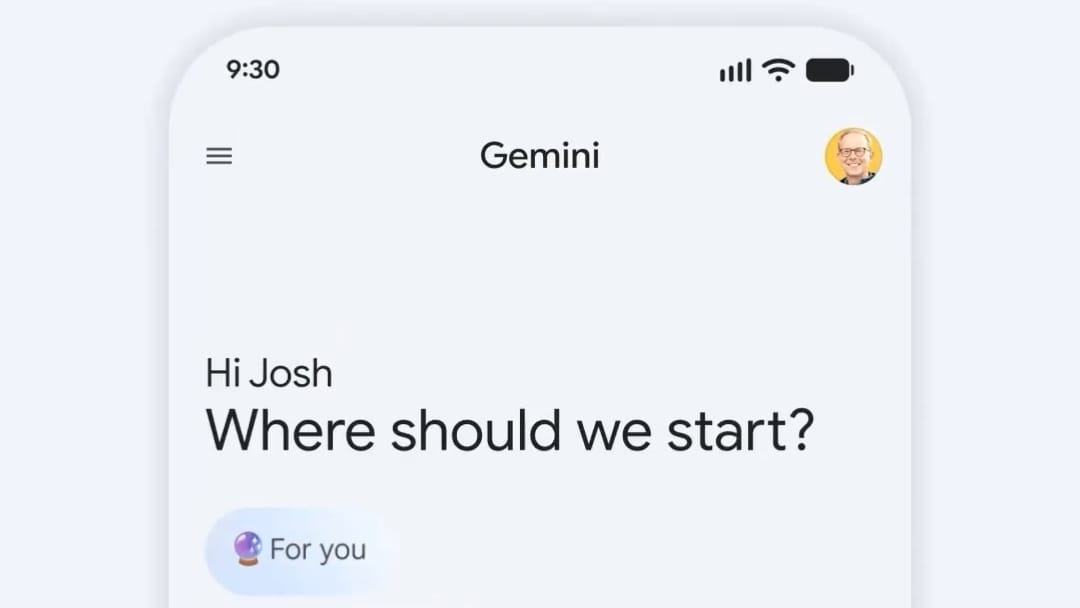
Google has outlined its vision for Gemini 4, the next advanced multimodal AI assistant expected in 2026, featuring autonomous agents, massive context windows, deep reasoning, and tight integration across Gmail, Android, Maps, and other Google services.

Speaking as someone who’s been poring over progress in the AI game for years now, I’m here to tell you that Google’s upcoming Gemini 4 is beginning to feel like a significant change on the horizon.
Projected for release in Q4 2026, Gemini 4 expands the capabilities of the extraordinary Gemini series and ventures new grounds in multimodal intelligence and real-world applications.
Key Features and Capabilities
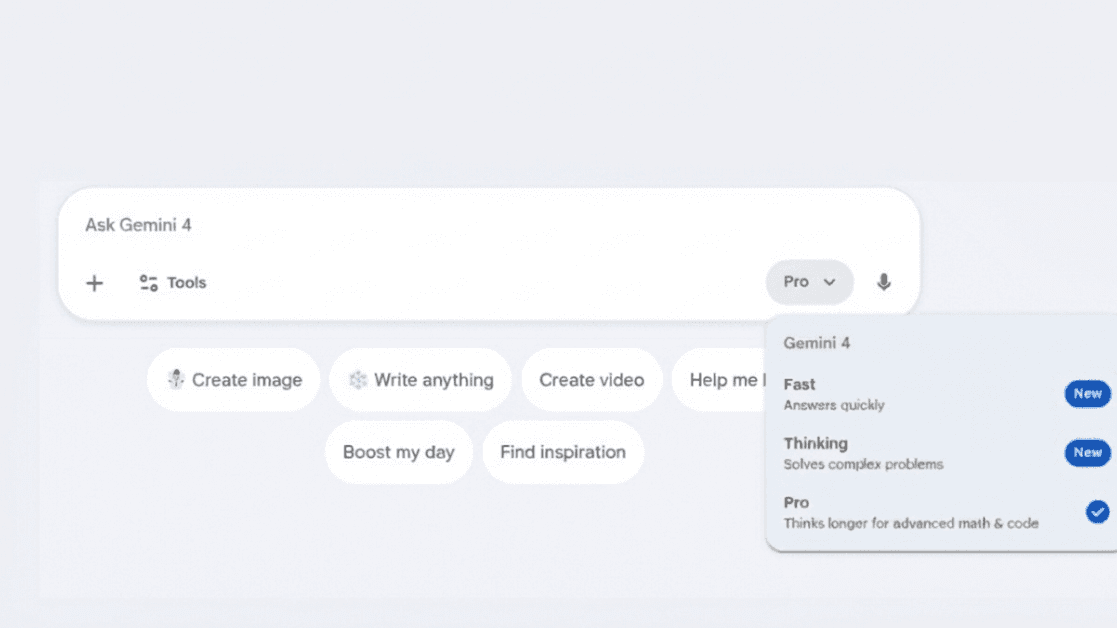
Gemini 4 promises to elevate AI with:
- Advanced Multimodal Processing: Seamlessly mixes text, images, audio, video and code in a single prompt to perform tasks such as analyzing videos or creating 3D simulations.
- PhD-Level Reasoning and Planning: Includes the usual “deep think” mode for handling complex problems with more powerful inference for multi-step workflows.
- Massive Context Windows: It can naturally cope with contexts of several million tokens, so that it can look at full codebases (or huge amounts of data) without losing context.
- Autonomous Agents: Full workflows can be run autonomously, e.g. making a dinner reservation, sorting inboxes or gathering research.
- Real-World Integrations: Extensive connections with Google’s ecosystem, such as Gmail for smart summaries, Calendar for scheduling, Maps for navigation, YouTube for content review and Android OS functionality.
And those capabilities extend from Astra for universal assistance to Mariner for browser-based agents, so Gemini 4 is well-suited not just for the home, but also for business.
Comparison to Gemini 3
To put it in perspective, here’s how Gemini 4 stacks up against its predecessor:
| Aspect | Gemini 3 (2025) | Gemini 4 (2026 Projection) |
|---|---|---|
| Context Window | 1 million tokens | 1+ million, potentially multi-million |
| Multimodal | Text, image, audio, video, code | Enhanced with 3D/spatial reasoning |
| Reasoning | Tops benchmarks in math, coding, PhD-level | Standardized deep think, better planning |
| Efficiency | Mixture of experts architecture | Faster inference, optimized training |
| Integrations | Google Workspace, Search, Assistant | Deeper with XR glasses, multi-agents |
| Benchmarks | Leads LMSYS Arena, 1500+ ELO | Expected to surpass in all categories |
From extension GPT-3, the first implementation in a different branch extends GPT-4.
Gemini 3 already surpasses competitors like GPT-5.1 and Claude 4.5 in the right places, but 4 aims to improve efficiency and add some spatial awareness for a more flexible tool for artistic and practical use.
Pricing, API, and Languages
Judging from the current pricing I wager Gemini 4 will follow a ‘tiered’ pricing strategy like in Gemini 3.
General access may be free through the Gemini app, with Pro capabilities available for as low as $20/month via Google AI Pro subscriptions.
Enterprise users will pay most likely by usage-based API rates, which the company plans to set at something like $1.50 per million input tokens and $10 for output with discounts available if you use caching or bigger batches of data.
The API will be accessible via Google Cloud’s Vertex AI, for agent-creation and deployment at scale. On the language side, Gemini 4 will build on Gemini 3’s extensive language capability which supports over 100 languages for both text and multimodal inputs for global availability.
In my time testing similar models, this pricing keeps it competitive, less expensive than OpenAI’s comparably powered options, while the API integration with Google tools makes it a no-brainer for developers.
Gemini 4 isn’t just an improvement, it’s Google’s wager on the ability of ambient intelligence. If it gets there, that could make many standalone AI tools obsolete by sewing smarts into everything from your phone to your glasses.